Sports coaching can be very rewarding, regardless of what age of players you coach but it is not something that pays well unless you are at the top of a professional sport. This is why coaches need to be aware of the potential costs that they could face and this is why taking out an insurance policy is a very sensible decision. Nothing should divert a coach away from having fun and pushing their team on but having proper insurance cover can go a long way to making their life easier.
Thursday, December 26, 2013
Sports coach insurance gives you a head start
If you coach a sports team,
what is the first thing you think of? The players you have on your team?
The opposition that you are going to play against? Perhaps you would
think about the tactics for the team line-up? All of these are important
issues that should be considered but above all those issues it makes
sense to look into sports coach insurance as one of the first duties you
need to take care of. There are many potential dangers for a sports
coach to consider when running a team and having proper insurance in
place can help to prevent any great financial mishap or disaster taking
place.
 The current climate is far more litigious than at any time before and
it is important for sports coaches to be aware that they could be
liable for a whole host of claims levied against them. Even if they were
not directly responsible for an incident or event occurring, there
could be a claim made against them. If a player on the team gets injured
during a training session, it may well be that a claim may be made
against the coach. If the injury causes the victim any stress or
hardship or perhaps leaves them financially worse off, having some form
of personal indemnity cover would be of great benefit for any coach.
The current climate is far more litigious than at any time before and
it is important for sports coaches to be aware that they could be
liable for a whole host of claims levied against them. Even if they were
not directly responsible for an incident or event occurring, there
could be a claim made against them. If a player on the team gets injured
during a training session, it may well be that a claim may be made
against the coach. If the injury causes the victim any stress or
hardship or perhaps leaves them financially worse off, having some form
of personal indemnity cover would be of great benefit for any coach.
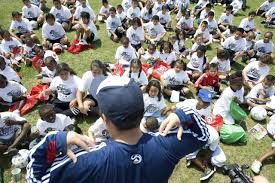 Equally, a coach could be responsible for claims relating to damage
of any property caused during training sessions or games. An example
would be a football player kicking a ball through a window and smashing
it during a training session. Even if there was no intent or malice in
the action, the cost of replacing the glass needs to be met by someone
and the owner of the property may raise a claim against the coach. It is
crucial to be aware of this because it could leave a coach severely out
of pocket if they do not take proper steps to protect themselves.
Equally, a coach could be responsible for claims relating to damage
of any property caused during training sessions or games. An example
would be a football player kicking a ball through a window and smashing
it during a training session. Even if there was no intent or malice in
the action, the cost of replacing the glass needs to be met by someone
and the owner of the property may raise a claim against the coach. It is
crucial to be aware of this because it could leave a coach severely out
of pocket if they do not take proper steps to protect themselves.
Sports coaching can be very rewarding, regardless of what age of players you coach but it is not something that pays well unless you are at the top of a professional sport. This is why coaches need to be aware of the potential costs that they could face and this is why taking out an insurance policy is a very sensible decision. Nothing should divert a coach away from having fun and pushing their team on but having proper insurance cover can go a long way to making their life easier.
Sports coaching can be very rewarding, regardless of what age of players you coach but it is not something that pays well unless you are at the top of a professional sport. This is why coaches need to be aware of the potential costs that they could face and this is why taking out an insurance policy is a very sensible decision. Nothing should divert a coach away from having fun and pushing their team on but having proper insurance cover can go a long way to making their life easier.

Wednesday, December 25, 2013
Sports Coach Insurance Will Provide a Safety Net
There is no doubt that a litigious trend has developed in recent
years and legal advice is being sought by people on a more regular
basis. This may have benefits for some people as they look to claim
damages but for many people, it can be fairly traumatic. Major companies
are well covered when it comes to people making claims against them but
what about people who work for themselves or are in charge of a group
on a volunteer basis. The possibility of being sued has made many people
question whether they should take roles like sports coaching or
personal trainer work but assistance is available.
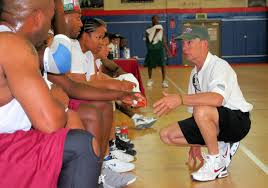 Sports coach insurance is essential if you are a coach for any sporting team as it provides peace of mind
in any situation. Like most insurance policies, there is a major hope
that a claim will never be made on the insurance but the risk of not
having insurance is not worth it. For what is quite often a small amount of money each month, a degree of protection is available which should allow people to go about their duties free from worry.
Sports coach insurance is essential if you are a coach for any sporting team as it provides peace of mind
in any situation. Like most insurance policies, there is a major hope
that a claim will never be made on the insurance but the risk of not
having insurance is not worth it. For what is quite often a small amount of money each month, a degree of protection is available which should allow people to go about their duties free from worry.
There are many areas where a sports coach may find themselves having a claim made against them. If someone under your tutelage or coaching picks up a bad injury, they may look to make a claim. There may well be nothing personal or no malice intended from this behaviour but if the person's injury prevents them from attending their work, they may feel that a claim is necessary. In certain circumstances, it may be that they feel poor advice or training methods from the coach led to them receiving the injury. Having the insurance against this sort of situation is crucial for a coach and could be the difference between maintaining their own financial safety or not.
A situation may arise where equipment that is being used by a coach or the team becomes damaged and the coach may need to make a claim to replace the equipment. Depending on what is damaged, this cost could be quite high so being able to have an insurance policy in place to provide security against this is crucial. By the time the fee for replacing equipment is finalised, the overall sum could be high, so sports coach insurance will come in very handy. It is hoped that the need for having sports coach insurance never arises but if it does and you do not have it, the effects could be disastrous.
There are many areas where a sports coach may find themselves having a claim made against them. If someone under your tutelage or coaching picks up a bad injury, they may look to make a claim. There may well be nothing personal or no malice intended from this behaviour but if the person's injury prevents them from attending their work, they may feel that a claim is necessary. In certain circumstances, it may be that they feel poor advice or training methods from the coach led to them receiving the injury. Having the insurance against this sort of situation is crucial for a coach and could be the difference between maintaining their own financial safety or not.
A situation may arise where equipment that is being used by a coach or the team becomes damaged and the coach may need to make a claim to replace the equipment. Depending on what is damaged, this cost could be quite high so being able to have an insurance policy in place to provide security against this is crucial. By the time the fee for replacing equipment is finalised, the overall sum could be high, so sports coach insurance will come in very handy. It is hoped that the need for having sports coach insurance never arises but if it does and you do not have it, the effects could be disastrous.
by James Broddy
Tuesday, December 24, 2013
How To Maximise Your Employability As A Community Sports Coach
 Here we discuss themes that will help you stand out as a Community
Sports Coach. The following themes also give an idea of what
organisations like the Run Fun Starz Group looks for in employing
coaches. If you are serious about your employability you will consider
the points discussed in detail.
Here we discuss themes that will help you stand out as a Community
Sports Coach. The following themes also give an idea of what
organisations like the Run Fun Starz Group looks for in employing
coaches. If you are serious about your employability you will consider
the points discussed in detail.As the practice of sports coaching is transforming to become more and more professional, recognized by institutes and accessible to members of the community. It is also becoming very competitive amongst Community Sports Coaches in the capital as employers have a higher number of people to choose from. In 2007 the extensive market report Sports Coaching in the UK II written by Rosie Townend and Julian North showed that professional coaches account for 30% of the workforce. This is an increase from 19% in 2004. The majority of existing coaches are community coaches working with with children and young people. Thus the participant level of coaching is getting increasingly competitive. As you move up the ladder there is more room to manoeuvre in relation to the career options available to you and financial opportunities.
Its fantastic when you have coached a multiple number of sports because that shows flexibility and it is a great asset to have in any field of employment. Nevertheless, it is no good being able to work within so many contexts of sport development and coaching and failing to discuss or even state that you personally enjoyed it. A Community Sports Coach needs to enjoy coaching even more because this needs to reflect on to the children and young people involved in your sessions. It is common knowledge amongst coaches that fun is the most important factor for people being coached especially children. This is why you need to show that you actually enjoy what you do.
A community coach's career is very dynamic and the coaching hours offered can often be limited. As a result coaches are sometimes forced to seek employment from a number of organisations at one time to support themselves financially. Many employees appreciate this. You should use it to your advantage as it means you have acquired knowledge about best & effective practice, coaching skills, research and planning from different sources and employers. You should clearly state and demonstrate what you have learned as an employee from working with each previous or current company. Employers want you to bring the key elements that you have learned to the table to their organisation as this shows that you can develop personally, professionally and boost the expertise of their workforce. You can express what you have with a line on your CV and you can propose how you can apply it into their set up if it is desirable.
You are probably already aware that a huge amount of funds has already been invested into Coach Education. So you need to make sure you attend workshops like How To Analyse Your Coaching provided by Sports Coach UK and gain additional National Sports Governing Bodies coaching qualifications as the year progresses. Target particular courses you want to do each year. This blog would suggest at least gaining one qualification and attending one workshop each year.The courses and workshops can be expensive but are largely worth it because they are so educational. But understandably in this economic climate it is difficult to find extra money to spend. Occasionally there are discounts and even courses and workshops offered free of charge. You can be informed of these offers by signing up for newsletters on sites like Pro-Active East London. Alternatively, join as a Sports Coach UK and/or National Sports Governing Body Member.
Finally building a good network of contacts you have previously worked with can help your prospects. So if you have done a really good job for an employee or even for an individual include them in your contacts. Add your contacts by storing them in your email account or by writing it down as a list of people who can further your claim to a position. It is best that the individual has credibility. For instance the opinions of Managers or a person with a senior role within the company you worked for will hold more weight. This means you are more likely to have a high quantity of contacts as well as quality. The more positive contacts you have the better your employability should be. Thereafter, when are asked about references you now have a wider choice. You should seek to match the right contact for the right coaching position. For example if you have been asked for references from a charity that is looking for someone to coach week end Dodge Ball sessions to Under 8's give them references that can specifically talk about you effectively coaching Dodge Ball to that age group and within a similar community setting. It makes sense because it also should help your case that you are the right person they are looking for. Ensure you always ask for permission before using your contact as a reference.
The main points to take:
A. Volunteer as soon as possible, as much as possible. It shows dedication to your role.
B. Express your enjoyment of the job and what you get out of it. Show what makes you different.
C. Regularly update your practical skills and knowledge with more Coach Education
D. Use the appropriate contact/reference to enhance your case in being the right Community Coach
Monday, December 23, 2013
Sports Coaching For Specific Games
Participation in sport at any level can be a richly rewarding
experience for athletes. The variety of opportunities is continually
expanding for both men and women through Little League programs, youth
sports, interscholastic athletics, and community recreation programs. A
well-qualified coach, who understands the many facets of his or her
role, is the single most important aspect of a successful program. A
properly trained coach can provide the setting in which all athletes
receive maximum benefits from their participation.
 For athletes to improve systematically, coaches need to follow
practical programmes based on sound principles. Coaches should be
encouraged to reflect critically on the process, methods and variables
that they use, or could use, to devise training interventions and
evaluate the effectiveness of their programmes.
For athletes to improve systematically, coaches need to follow
practical programmes based on sound principles. Coaches should be
encouraged to reflect critically on the process, methods and variables
that they use, or could use, to devise training interventions and
evaluate the effectiveness of their programmes.
There are four key ingredients for a successful sports coaching program: determining training needs, individualizing the programme, setting goals, making a plan.
Most coaches and sports scientists agree that there is a lack of sound theoretical framework that enables to optimally prescribe training and competition activities in terms of sequencing and proportion. There is much evidence available regarding the methods and protocols that are appropriate for the development or maintenance of individual performance factors.
When reflecting upon the effectiveness of a sports coaching intervention, the coach needs to consider the following four factors: what was planned; what was actually completed; what the outcomes were; and how these outcomes compared with the desired outcomes. These considerations probably seem like common sense and fairly simple to apply. Critical to the success of any such interpretation is that it is not just an afterthought but rather adequate consideration is given to the process at the programme design stage. Athletes respond to sports coaching interventions in different ways and there is no one right way for everyone.
 Methods traditionally used by coaches to record sports coaching programme
data have several limiting factors. Consequently, for many coaches the
ability to assess the effectiveness of their sports coaching programme
in order to make on going adjustments is massively time consuming,
infrequent and somewhat of a subjective exercise. Over the last decade
there has been an increase in the availability of electronic templates
via web-based companies or software packages. The software is usually
designed to enable the coach to personalize the structure, terminology
and variables used, allowing activities to be described using both
quantitative and qualitative parameters.
Methods traditionally used by coaches to record sports coaching programme
data have several limiting factors. Consequently, for many coaches the
ability to assess the effectiveness of their sports coaching programme
in order to make on going adjustments is massively time consuming,
infrequent and somewhat of a subjective exercise. Over the last decade
there has been an increase in the availability of electronic templates
via web-based companies or software packages. The software is usually
designed to enable the coach to personalize the structure, terminology
and variables used, allowing activities to be described using both
quantitative and qualitative parameters.
There are four key ingredients for a successful sports coaching program: determining training needs, individualizing the programme, setting goals, making a plan.
Most coaches and sports scientists agree that there is a lack of sound theoretical framework that enables to optimally prescribe training and competition activities in terms of sequencing and proportion. There is much evidence available regarding the methods and protocols that are appropriate for the development or maintenance of individual performance factors.
When reflecting upon the effectiveness of a sports coaching intervention, the coach needs to consider the following four factors: what was planned; what was actually completed; what the outcomes were; and how these outcomes compared with the desired outcomes. These considerations probably seem like common sense and fairly simple to apply. Critical to the success of any such interpretation is that it is not just an afterthought but rather adequate consideration is given to the process at the programme design stage. Athletes respond to sports coaching interventions in different ways and there is no one right way for everyone.
by Ethen Smith
Sunday, December 22, 2013
How Do Compulsions of Co-Active Coach CPCC Motivate Sports Coaching?
 CTI has trained co-active coach CPCC worldwide and today trains more
new coaches each year than any other training programmed. Co-active
coach CPCC brings to coaching a lifelong passion for personal
development and a compulsion for improving performance, quality, clarity
and focus within personal and business relationships. Co-active coach
CPCC creates powerful partnerships ensuring improvements in development,
effectiveness and personal fulfillment through the twin principles of
discovery and action. A Certified Professional Co-Active Coach (CPCC) is
awarded by the Coaches Training Institute and can also be an Accredited Certified Coach (ACC) with the International Coach Federation.
CTI has trained co-active coach CPCC worldwide and today trains more
new coaches each year than any other training programmed. Co-active
coach CPCC brings to coaching a lifelong passion for personal
development and a compulsion for improving performance, quality, clarity
and focus within personal and business relationships. Co-active coach
CPCC creates powerful partnerships ensuring improvements in development,
effectiveness and personal fulfillment through the twin principles of
discovery and action. A Certified Professional Co-Active Coach (CPCC) is
awarded by the Coaches Training Institute and can also be an Accredited Certified Coach (ACC) with the International Coach Federation.As a Professional Certified Coach (PCC), and Certified Professional Co-Active Coach (CPCC), graduates work with a selected number of coaches individually who are committed to raising their bar and taking a stand for excellence. The Co-Active Coach CPCC is also passionate to work with coaches who want to make their business thrive and make their mark. The Co-Active Coach CPCC also offers coaching for small groups of coaches who are looking to fulfill their mentor coach requirements for ACC renewal, or ACC/PCC credentialing application.
The motive of sports coaching in lifestyle, career and business sector is the same, in sport or business, where the coach is usually someone who has much experience in the area of expertise or someone who is known in their sports or industry, and brings along their experience and expertise to train people to achieve. Its origins, of course came from the sporting arena where coaches have for centuries helped athletes achieve their goals.
 Sports coaching prepares players by conducting practices, workouts,
and focuses on boosting performance, executes game plans and develops
strategies to help players win and often makes more formal decisions
whereas players make more informal and on the spot decisions. In
addition, co-active coach CPCC certification is also given to the
sportsmen so that they become eligible to play games at all levels.
Sports coaching prepares players by conducting practices, workouts,
and focuses on boosting performance, executes game plans and develops
strategies to help players win and often makes more formal decisions
whereas players make more informal and on the spot decisions. In
addition, co-active coach CPCC certification is also given to the
sportsmen so that they become eligible to play games at all levels.Sports motivation, when used in professional or casual sports, can take many forms. The coaches use video tapings of successful games to enhance feelings of pride and skill with their team members. Watching strategic moves with positive outcomes on individual levels as well as teamwork repeatedly ingrains those moments within the players' memories. Players who view the videotape detailing a mistake they had made can identify the problem and correct it. This works in reverse as well; players who see themselves making a fantastic play will be able to do it again and again.
by Ethen Smith
Saturday, December 21, 2013
Sports Coach Tips Can Get the Best From Your Team and You
 Sports coaching can
be one of the most rewarding roles to get involved in and seeing
athletes or sports people develop and progress in front of your eyes is a
joy to behold. Sports talent can be nurtured and the majority of
players or athletes at the top of their field usually have one or two
coaches that they owe a great debt of gratitude to. However, much like
there are only so many athletes that reach the top of their profession,
the same can be said for coaches. There are countless coaches working
all over the world but it takes a lot to be recognised as a great one.
Thankfully, there are a number of sports coach tips that can help anyone
improve as a coach.
Sports coaching can
be one of the most rewarding roles to get involved in and seeing
athletes or sports people develop and progress in front of your eyes is a
joy to behold. Sports talent can be nurtured and the majority of
players or athletes at the top of their field usually have one or two
coaches that they owe a great debt of gratitude to. However, much like
there are only so many athletes that reach the top of their profession,
the same can be said for coaches. There are countless coaches working
all over the world but it takes a lot to be recognised as a great one.
Thankfully, there are a number of sports coach tips that can help anyone
improve as a coach.First of all, the coach has to really understand their sport. This is not to say they have to be excellent at the sport themselves but they do have to be able to talk about it and know how to perform. There are many great coaches who never scaled the heights of their own game but are talented at spotting and nurturing talent in others. Having a passion for the sport is essential as it is this passion that will keep driving you on and keep you bouncing back from adversity. It is not easy being a sports coach as there are so many potential pitfalls and barriers but overcoming these can see a good coach become great.
 When thinking about sports coach tips, it is essential to think of people management skills
alongside sporting skills. A good coach will be able to get the best
from their team or athletes at every single performance or training
session. The level of performance given can depend on attitude and a
good coach will understand how to work with their team. Some players
will need an arm around the shoulder to motivate them whereas other
players prefer to be challenged and motivated to work harder. A good
coach will be able to know which type of player is which and should
tailor their approach to get the best from every individual.
When thinking about sports coach tips, it is essential to think of people management skills
alongside sporting skills. A good coach will be able to get the best
from their team or athletes at every single performance or training
session. The level of performance given can depend on attitude and a
good coach will understand how to work with their team. Some players
will need an arm around the shoulder to motivate them whereas other
players prefer to be challenged and motivated to work harder. A good
coach will be able to know which type of player is which and should
tailor their approach to get the best from every individual.Sports coach tips will also look to maintain a balance between fitness and technique. Modern sports people are extremely fit but their level of fitness is now every much tailored to their sporting needs. Sports fitness can be very technical and knowing how to analyse fitness can be important but again, knowing what level of fitness a player or athlete requires will be a good starting point for any coach.
by James Becksdale
Subscribe to:
Comments (Atom)